The next step to creating my speakeasy is the most important part; the bar. While creating the bar itself may be simple, it presents a new problem. I must be able to scale the props correctly. If the props aren’t to scale, then everything will look out of place. To do this, I must import all of my existing objects into the same file first, before creating the bar. This was easy to do, I simply had to use the append feature to import the objects from the other files. I then scaled all of the bottles and glasses I have so far to a similar size, scaled the stool to realistic proportions and made a cuboid as a bar placeholder.


When modelling the bar, I looked at my previous reference images- photos and other 3D models- and decided to make simple wooden panelling. This was easy to create using extrude and scale tools, and works to effectively communicate an art-deco aesthetic without being too complex. Its simple design also allows me to resize it with ease.
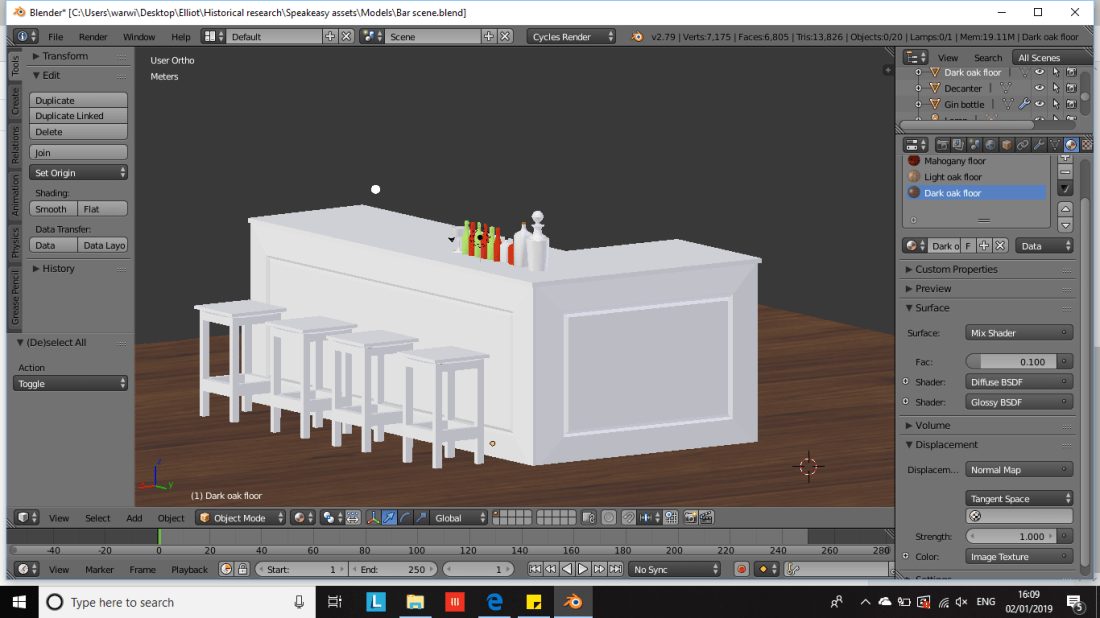
Using the bar for scale, I blocked out the rest of the area using cubes. This allowed me to get a sense of the scale of the bar, without modelling anything else first.
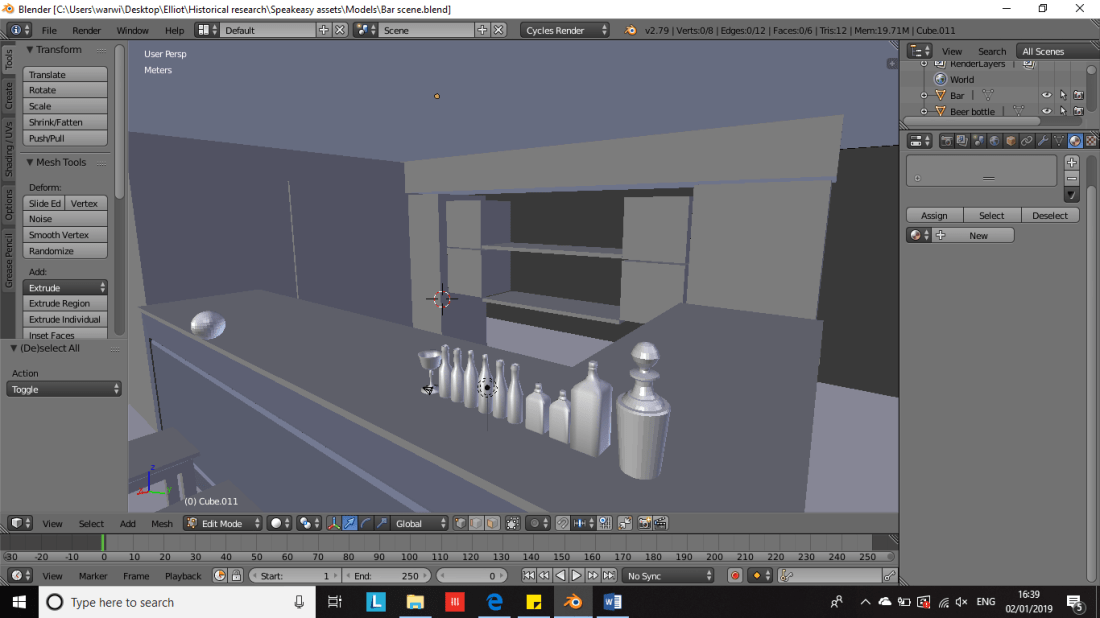


Most of the remaining structures are simply textured cuboids, with the exception of the cabinets and wooden back panel. I decided not to make the top cabinets and shelf from my original concept, because these would be too high compared to the rest of the bar area. I also decided not to make glass windows for my cabinets, because this would take too long to make, and I would rather finish the bar first.
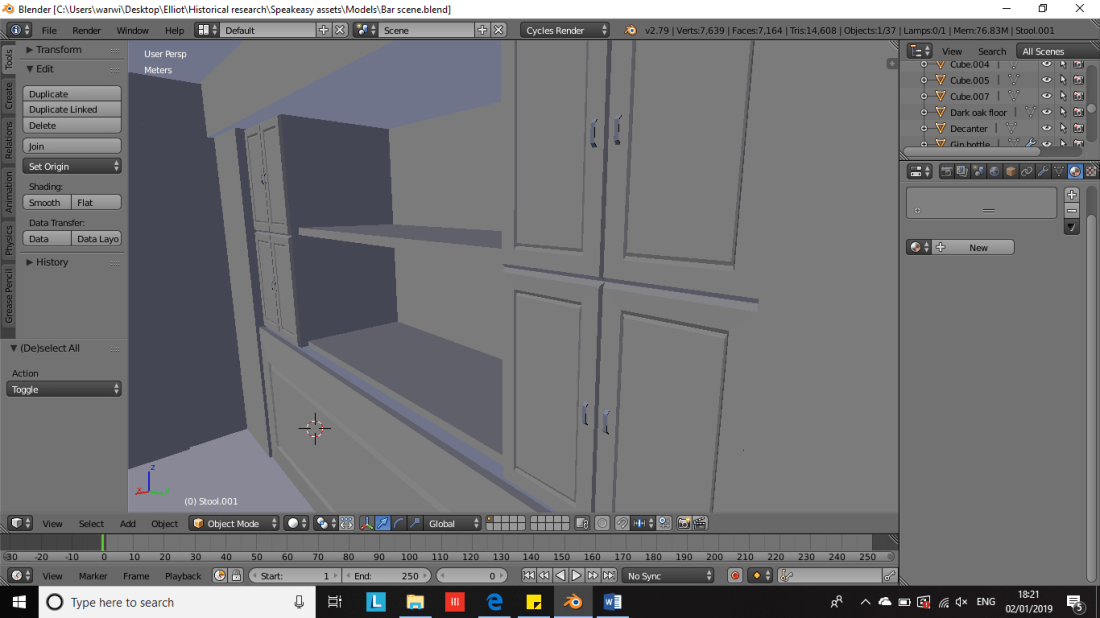
I added textures to the bar, stools, cabinets, shelves and ceiling. I also changed the placeholder lighting from blue to orange and increased its strength to 3000. This gives the bar a soft glow, which accurately reflects the lighting I imagined the speakeasy would have.
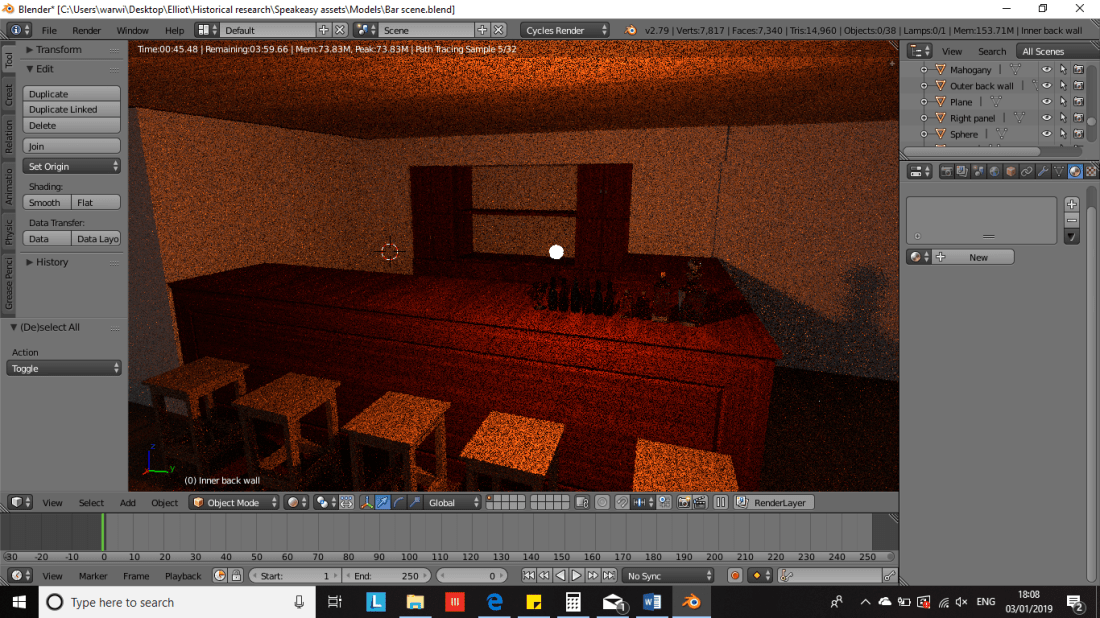
For the walls, I decided to use a brick texture. As of right now, I don’t know how to resize and rotate textures, so I will research solutions to this problem. So far, I have tried a method that involves mapping, but this only scales the texture correctly on one side of an object, and stretches it out on the others. I will come back to this later.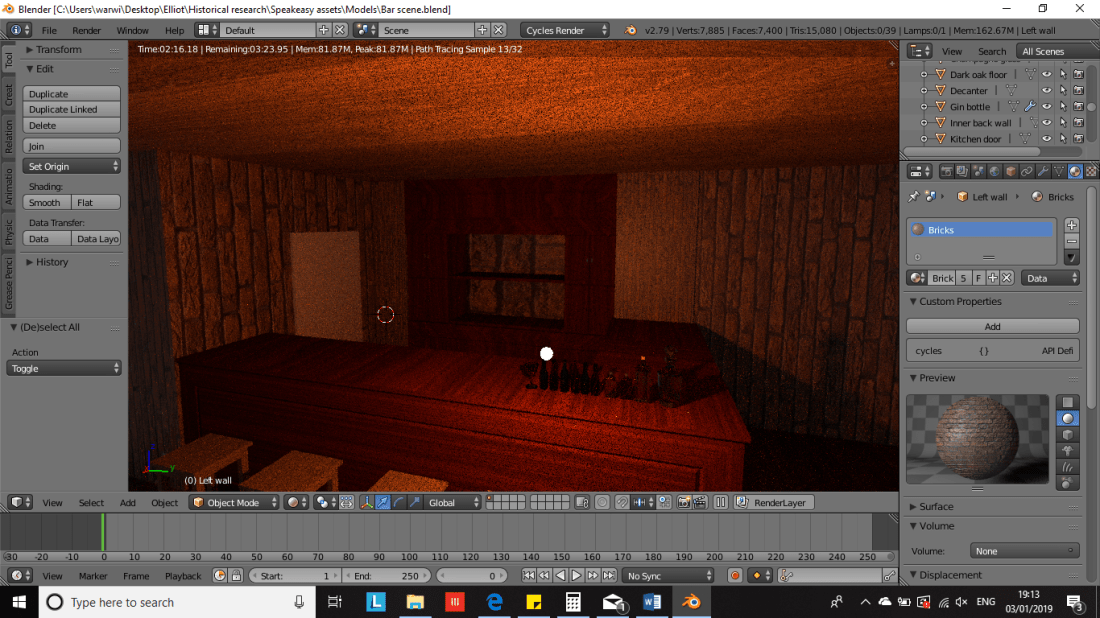
In spite of this problem, I made a textured door with a basic doorknob, which would lead to the kitchen. I also laid out all of the glasses and bottles.


With these steps out of the way, only two objectives remain; Fix the textures to scale correctly, and refine the lighting.

 Elliot's blog